
The impacts of climate change are felt everywhere and in all spheres of life. With scientists having predicted that the effects of climate change are yet to become worse if drastic measures and collective efforts are not taken, it is clear that the future might be bleaker than we think.
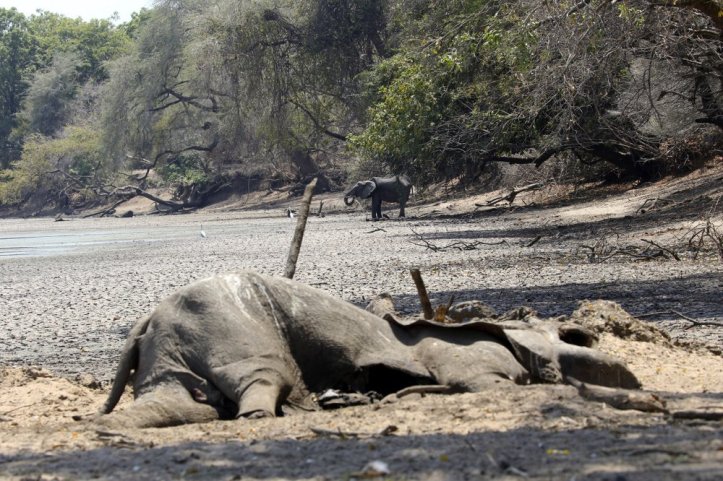 A dead elephant by a dried up waterhole at Mana Pools, Zimbabwe
One of the areas most affected by Climate Change effects remains the African wildlife area. Over the recent years, there has been increased occurrences of serious droughts coupled with heat waves in areas where animals like the big five call home. In Zimbabwe, a country considered one of the few places where the world’s most elephant populations are found, the sight of elephants dying because of thirst and hunger is becoming very common.
In one instance, upon taking a drive around Mana Pools in Zimbabwe, a dying elephant could be observed stuck in the mud close to a dry patch of land that used to be a waterhole. A few moments later, the giant gave up the fight. This is just but one of the many examples of the reality of climate change impacts on the ground.
Drying rivers, drying waterholes, drying vegetation, and starving wildlife are phenomena that have become all but too common. This has also increased the human wildlife conflicts because humans resort to hunting wildlife to quench hunger while wildlife encroach to farms as a way of surviving from hunger I’m the forests.
It is very key to mobilise communities around wildlife areas and assist them in taking meaningful climate action to reduce the impacts of Climate Change.
Community Climate Action Trust is a nongovernmental organisation focused on mobilising and supporting communities tackle climate change and it’s impacts.
Email us: ccatrust.org@gmail.com
Twitter: @cca_trust
 Community Climate Action Trust