

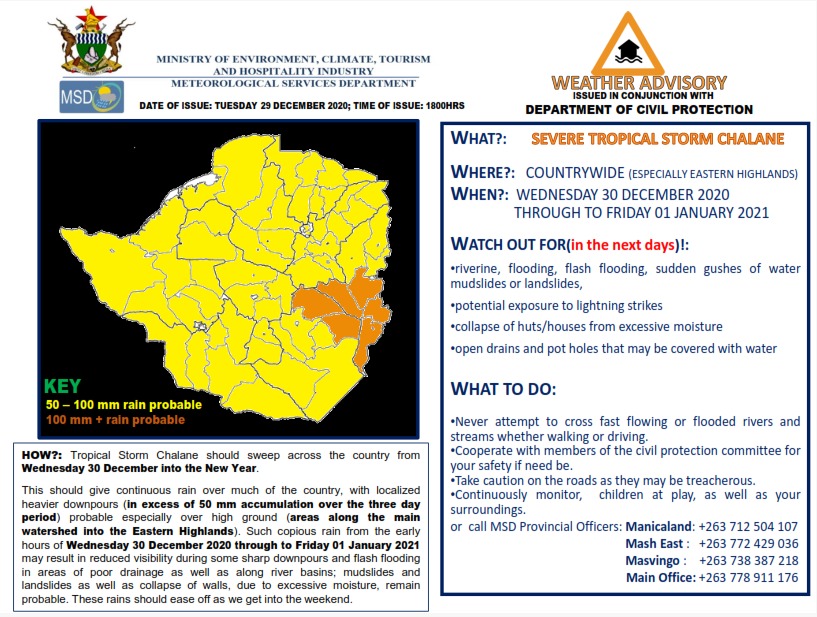
The recent warnings of the Predicted Cyclone Chalane are not to be taken lightly. The recent memories of the Cyclone Idai disaster which claimed lives and destroyed livelihoods are a reminder of how such disastrous climate change impacts can affect lives. These also remind us of the existing reality of how unprepared and ill-resourced communities are to mitigate and survive such disasters. Below are a number of survival tips and advices on how to minimize the risks of dying from cyclones and storms. Please note that the tips offered here cannot substitute official measures put by the official disaster management departments, civil protection units, and authorities that are mandated for that role in the country. The following are there to contribute to the already available advice and tips.
Please read this survival tips and apply them, as they may save your life:
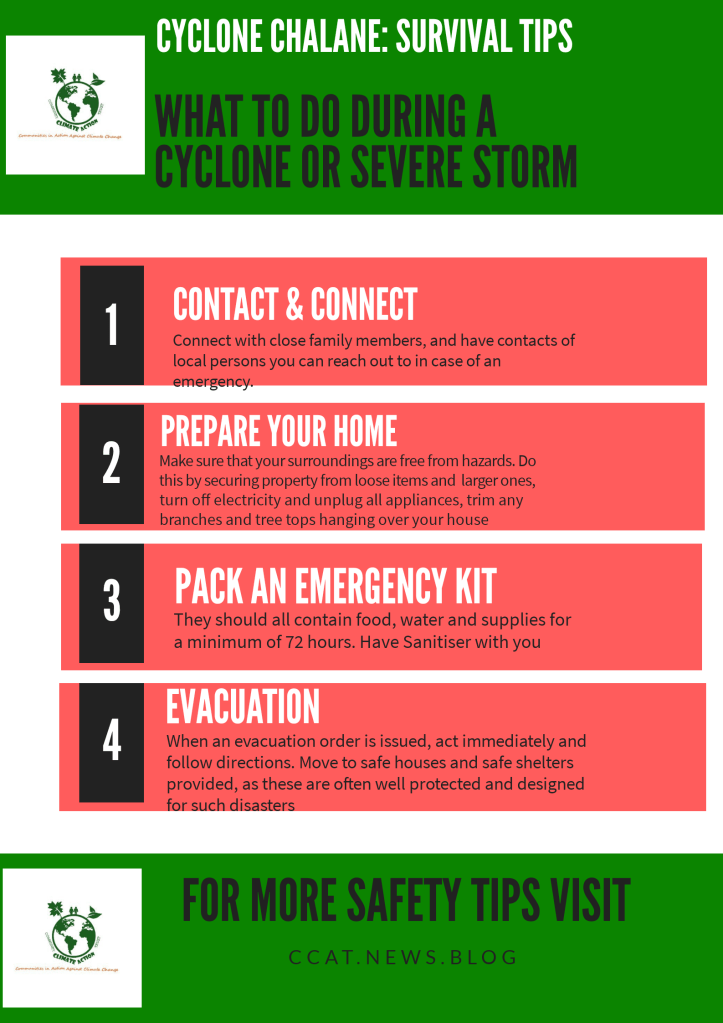
1. Connect with close family members, and have contacts of local persons you can reach out to in case of an emergency. Have contacts of the local Civil Protection Unit and/or local council.
2. Keep important documents in a safe place, sealed with plastic covering. (The checklist of such documents includes; Driver’s license, Passport, Birth Certificates, Qualifications, Marriage certificates, wills, and Property titles, sentimental items E.tc)
3. Make sure that your surroundings are free from hazards. Do this by clearing property from loose items and secure larger ones, turn off electricity and unplug all appliances, trim any branches and tree tops hanging over your house, and secure open spaces.
3. Make sure that you have basic survival kit, which include water, protective clothing, a first aid kit, mobile phone, a stock of basic food stuff that can last at-least 3 days (Preferably non-perishable), and light sources (e.g torches, phones with durable battery), toiletries, hand sanitiser, and cash.
4. Check the pathway of the cyclone or storm from meteorological departments or authentic sources and move to an area away from the storm’s path for a period till it subsides or loses strength
5. Stay Indoors in the strongest part of the house. Avoid hiding under dilapidated structures with loose roofs and loose foundations.
6. If the Building begins to break up, shelter under a strong table, bench or heavy mattress.
7. Avoid crossing flooded rivers at all times as these have contributed to the most casualties. Do not drive vehicles over flooded streams.
8. Do not hide is isolated tall objects or be on high open spaces, as these are prone to being struck by lightning
9. When an evacuation order is issued, act immediately and follow directions. Move to safe houses and safe shelters provided, as these are often well protected and designed for such disasters.
10. Follow all guidelines and safety measures provided by authorities. These include disaster management authorities, Red Cross Society, Local Councils, State information departments, Local Hospitals, authorised Non-Governmental Organisations, and all mandated authorities.
11. In case you are caught up in the storm, seek shelter from the nearest building or housing structure. If you are driving during when the cyclone hits, immediately park in an area that is clear of trees, powerlines, and rivers.
12. Remember to stay calm before, during, and after a cyclone. The time immediately after a cyclone is equally dangerous, and deaths or injuries often happen when people start to explore flooded rivers, loose objects, loose trees, broken electric power lines, spilling sewer, snakes, and so forth.
13. Don’t forget to check on your friends, neighbors, and loved ones immediately after the cyclone
 Community Climate Action Trust