

By Sinethemba Ndebele
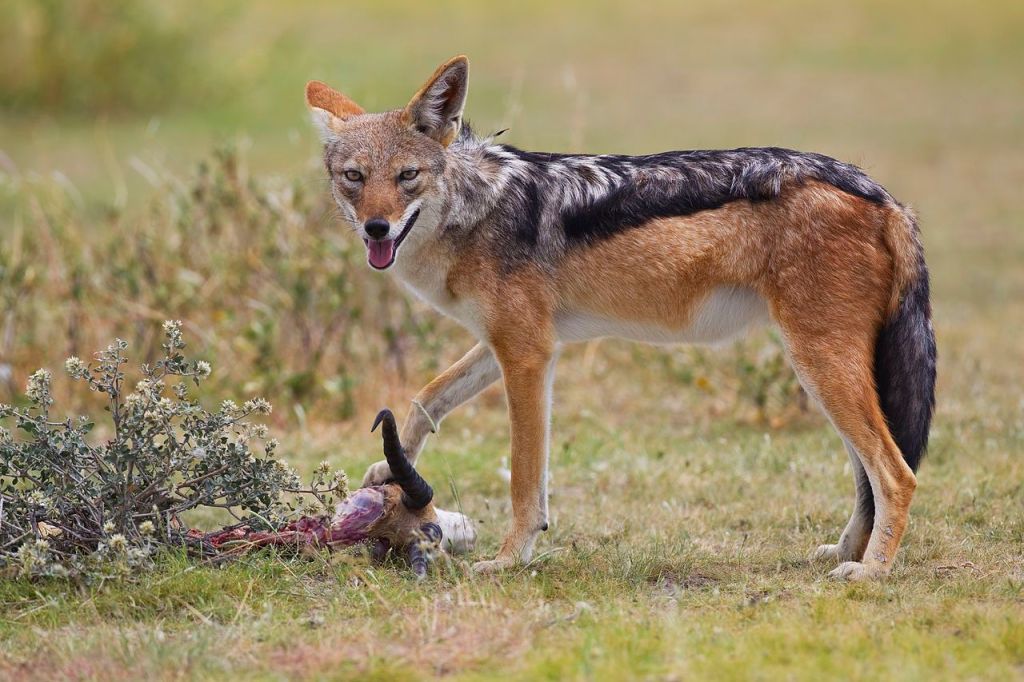
As the scramble for more land continues to expand, the overlap between human and wildlife habitats increases, leading to a surge in human-wildlife conflict. Jackals are one of the species that have been caught at a crossroads with humans in Mangwe District, especially wards 1 and 12. Once revered for their intelligence and adaptability, Jackals are now often viewed as pests and threats to human livelihoods. This article explores the complexity of human-jackal conflict and potential solutions.
Jackals are opportunist omnivores feeding on a wide range of prey, from small mammals to fruits and vegetables. As human settlement expands, jackals are increasingly attracted to the abundance of food sources, e.g., goats, farm produce, and vegetables, leading to conflicts with farmers, herders, and the community as a whole. According to the affected communities, Jackals only eat the inner part of goats, leaving the rest untouched – this causes a great loss to their livelihood. The farmers have been living on the ice edge as the attacks intensify even during the day, thus posing threats to their safety and their livestock.
One of the causes of the conflict is habitat fragmentation caused by human activities such as deforestation for fields, settlement, and firewood, thus swallowing part of jackal habitat and forcing them to adapt to human-dominated landscapes. More so, the recent drought attributed to elnino in Zimbabwe has caused a decrease in the availability of food, causing jackals to move further to human settlement in search of food. Further worsening the issue is a lack of awareness and understanding of animals such as jackals, thus leading to a further increase in conflicts. Most people have limited understanding of their behaviour and ecology, therefore contributing to conflicts.
Therefore, it is high time awareness and sensitization be raised among the affected community, and there is a need for knowledge about jackal behaviour, ecology, and conservation to foster co-existence.
Conflict risk mitigation strategies should be implemented as a way of reducing conflict. This can be done by fencing, guarding animals, using non-lethal deterrents, engaging the relevant authorities such as ZIMPARKS and possibly coming up with compensation schemes for farmer’s herders who suffer from losses, which may help to alleviate tensions.
In a nutshell, Human-Jackal conflict is a complex issue, driven by various factors. Addressing this conflict requires a multi-faceted approach incorporating conflict mitigation strategies, education, and conservation efforts.
About the Writer: Sinethemba Ndebele is an environmental action practitioner, a climate activist, and a freelance environmental journalist residing in Plumtree. She studied Geography and Population Studies and currently volunteers at Community Climate Action.
 Community Climate Action Trust